About

Austurusa is an independent open-idea organization for difficult problems in science and engineering. It is organized around questions rather than product categories or a single discipline.
Jack Shaquer
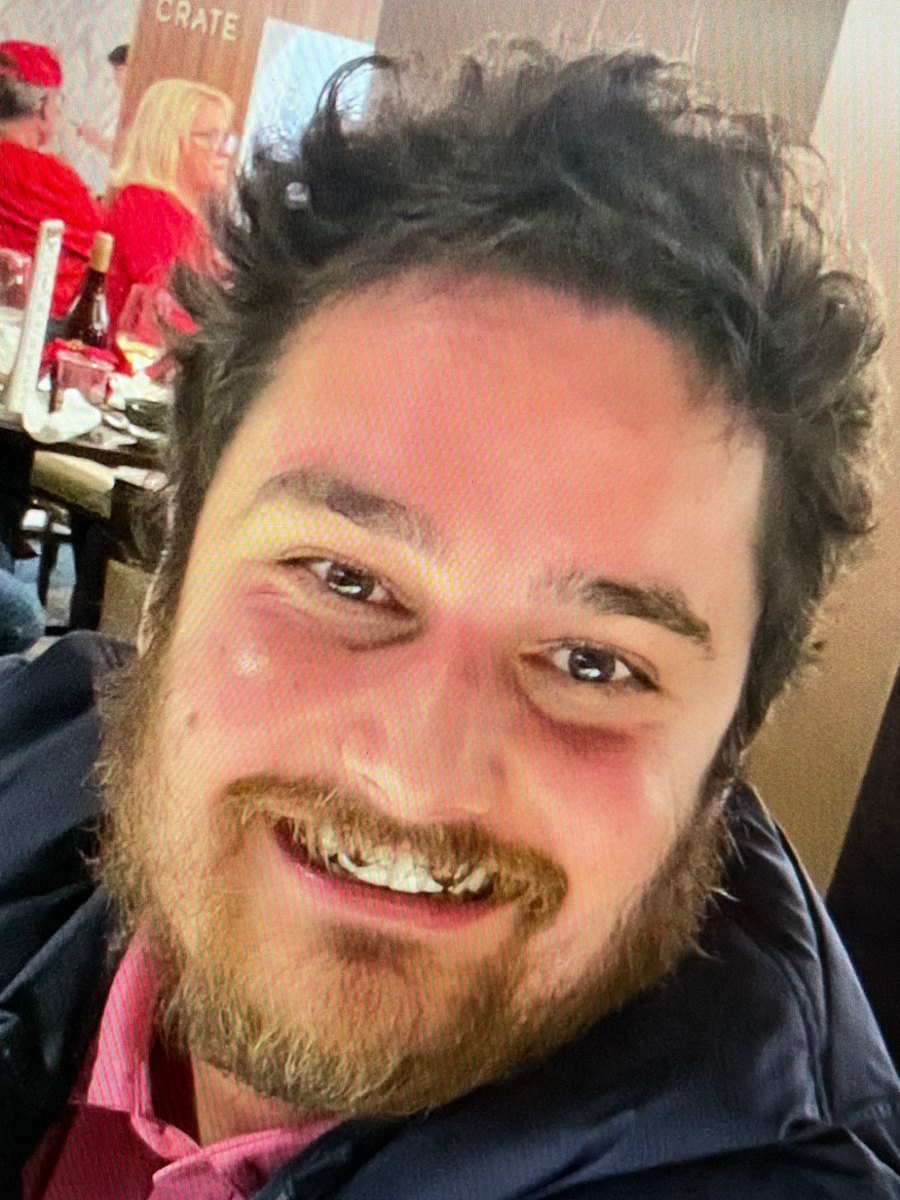
Electrical engineer interested in real-time embedded systems, power electronics hardware, nonlinear circuits, and computer systems.
Email: jack@austurusa.com
LinkedIn: linkedin.com/in/jackshaquer
education
California Polytechnic State University, San Luis Obispo
B.S., Electrical Engineering · Fall 2022
experience
Quest Global — Senior Power Electrical Engineer · Sunnyvale, California
Python package development for detecting power anomalies.
Alpfa Medical — Electrical Engineer · Menlo Park, California
Ablation-generator electronics, 400 V-to-3.2 kV flyback power conversion, mixed-signal closed-loop control, schematic design, PCB layout, and bench validation.
Abbott — Senior Electrical Engineer · Alameda, California
Next-generation battery-test hardware, electronic-load development, leakage-debug validation, and NFC / Bluetooth test integration.
Adona Medical — Electrical Engineer · Campbell, California
Hardware lead for a closed-loop wireless-charging wand: architecture, silicon selection, schematic/layout, fabrication support, bring-up, and transmit/receive validation.
Apple — Hardware System Integration Intern · Cupertino, California
Next-generation hardware development board ownership, schematic/layout/fabrication/bring-up, Python validation automation, coexistence experiments, and system-level power/timing validation.
Shifamed — Firmware Engineering Consultant · Campbell, California
Sub-1 GHz TI MCU firmware, I²C pressure-sensor integration, flash data handling, and RF packet transmission / reception.
Varian — Electrical Engineering Intern · Palo Alto, California
Handheld Geiger-counter hardware, DC-motor breakout and current-monitor validation, PCB development, and Python analysis of factory multileaf-collimator data.
Public descriptions are intentionally concise; project pages contain deeper technical artifacts where available.
principles
- Problem first. Projects begin with a precise question and an explicit standard for failure.
- Separate kinds of evidence. Theory, numerical simulation, circuit simulation, software implementation, and physical measurement are labeled distinctly.
- Search before claiming novelty. Prior art is treated as part of the research, not as a formality at the end.
- Keep negative results. Failed architectures can be useful when they eliminate plausible paths or sharpen the problem statement.
- Publish enough to be challenged. Work should expose the assumptions, equations, methods, and artifacts needed for another expert to interrogate it.
scope
Current interests include nonlinear analog circuits and dynamical systems, computer systems, GPU execution, distributed and cryptographic systems, energy and power systems, and problems that cross those boundaries.